Boxes on a Slide: When the Org Chart Gets Redesigned and the Work Doesn't
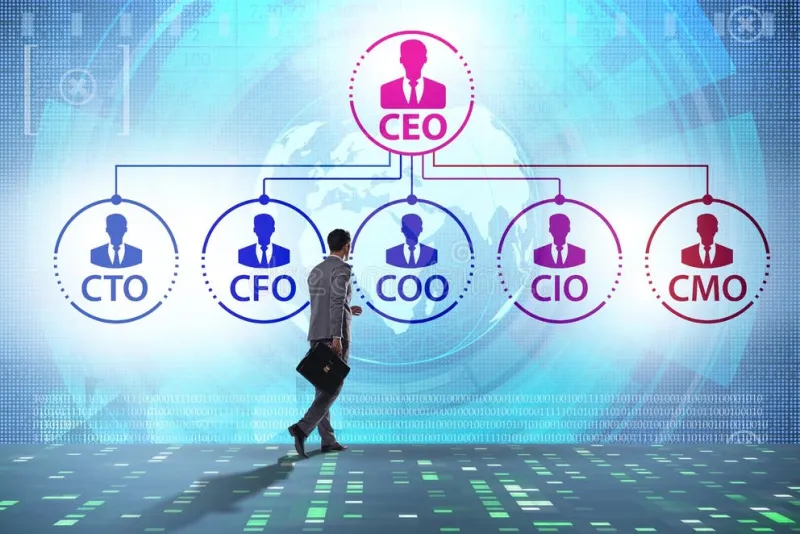
Photo: corporate executives looking at organizational chart diagram on glass wall modern office, via thumbs.dreamstime.com
Every year, a familiar announcement lands in the inboxes of corporate America: a memo from the CEO unveiling a new operating model. Divisions merge. Layers collapse. A Chief Transformation Officer is appointed, complete with a mandate and a slide deck. The stock price ticks up on the news, analysts applaud the 'streamlined structure,' and within six months, the company looks different on paper.
And yet the customer still waits eleven days for a claim to process. The sales team still emails spreadsheets across departments. The software that was supposed to unify everything sits half-adopted, licensed but ignored.
The uncomfortable truth is that many organizations have learned to perform transformation without doing it. The reorganization is the performance — and the org chart is the stage.
The Substitution Problem
Restructuring is seductive because it is visible, decisive, and comparatively fast. You can redraw reporting lines over a weekend. You cannot redesign how work actually flows over a weekend, and everyone involved knows it. So when leadership faces pressure to show momentum — from the board, from investors, from an activist — the org chart becomes the path of least resistance.
The result is what might be called transformation theater: activity that signals change without producing it. A new 'digital' division is carved out, but it inherits the same approval chains as the old one. Teams are renamed 'pods' or 'squads,' but their incentives still reward individual departmental metrics. The customer journey — the thing transformation is nominally for — is never redrawn at all.
The problem is not that structure doesn't matter. It does. The problem is that structure is downstream of strategy, not a substitute for it. When you reorganize around a business model you haven't changed, you've simply rearranged the furniture around the same processes.
How Org Design Quietly Sabotages Software
Software rollouts are where this failure becomes expensive and measurable. Consider three patterns that recur across US enterprises:
The orphaned platform. A company deploys a CRM or ERP platform and assigns ownership to a newly formed team — one that has budget authority but no influence over the departments whose workflows it must change. The software works. The adoption doesn't. Because the people who were reorganized into the new team were never given the authority to alter the incentives of the people outside it.
The duplicated stack. Two divisions merge into one reporting structure, but each keeps its legacy tooling because 'migration is phase two.' Phase two never arrives. The enterprise now pays for overlapping licenses, and the merged entity cannot produce a single view of the customer — the very thing the merger was supposed to enable.
The misaligned incentive. A reorganization promises cross-functional collaboration, but compensation still tracks siloed KPIs. The new enterprise platform requires data sharing between functions. Sharing data makes someone's numbers look worse. The platform quietly starves.
None of these are software failures. They are organizational design failures wearing a software costume. And they explain why so many enterprise technology investments underperform their business cases: the tooling was modernized, but the operating model around it was only redecorated.
A Diagnostic for Separating Transformation from Theater
Before treating a restructuring as transformation, leadership teams should be able to answer four questions with specifics, not slogans.
1. What customer outcome changed? If you cannot name a measurable difference in the customer's experience — cycle time, error rate, first-contact resolution, renewal — the reorganization changed the company, not the value it delivers. Genuine transformation starts with a journey, not a reporting line.
2. Which incentives were rewritten? Look at the compensation plans and scorecards of the people most affected. If they are incentivized identically before and after the reorg, behavior will not change. New structures with old incentives produce new politics, not new results.
3. What process was actually retired? Transformation means stopping things as much as starting them. If no approval step, handoff, or legacy system was formally decommissioned, the change was additive — and additive change is how complexity compounds.
4. Who lost power, and was it acknowledged? Real transformation redistributes decision rights. If no one's authority diminished, nothing fundamental changed. The most honest signal of genuine transformation is a senior leader who can articulate exactly what they gave up.
From Chart to Operating Model
None of this argues against reorganization. Sometimes structure is the bottleneck, and redrawing it is necessary. But structure should follow a redesigned operating model — how decisions get made, how work flows across boundaries, how technology and incentives reinforce the intended customer experience — rather than stand in for one.
The practical sequence for US enterprises is straightforward: map the current customer journey and its friction points; redesign the processes that create that friction; rewrite the incentives that govern those processes; and only then decide what structure best supports the new model. Done in that order, a reorganization becomes the last step of transformation rather than a substitute for it.
The org chart is a photograph. Transformation is a movie. Companies that confuse the two will keep announcing change and wondering why nothing moves — while competitors who did the unglamorous process work quietly pull ahead.